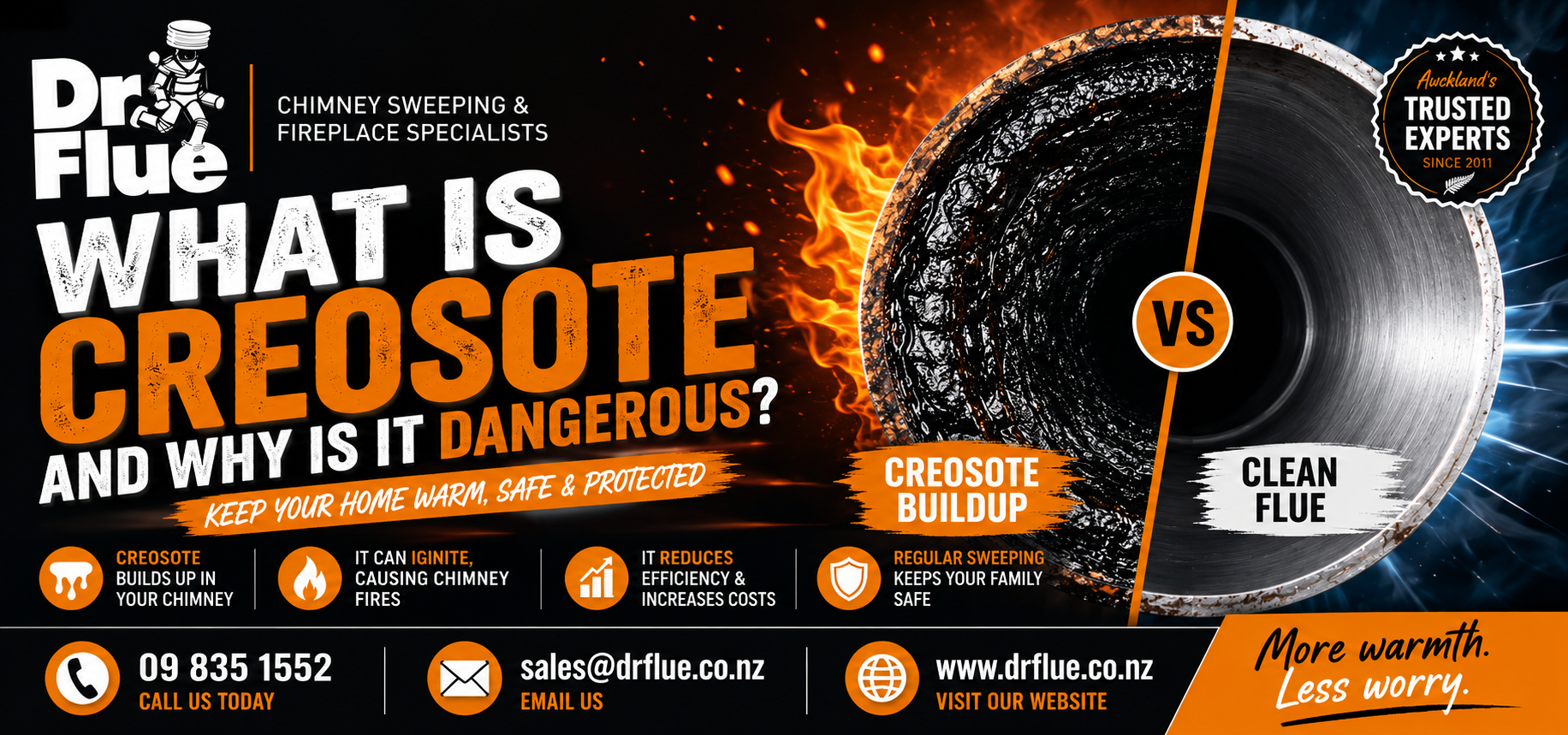
What Is Creosote and Why Is It Dangerous?
If you own a wood burner, you've probably heard the term creosote.
But many homeowners don't fully understand what it is, how it forms or why chimney sweeps take it so seriously.
At Dr Flue, creosote buildup is one of the most common issues we encounter during chimney inspections and sweeping.
Left unchecked, it can significantly reduce fireplace performance and, more importantly, increase the risk of a chimney fire.
What Is Creosote?
Creosote is a highly combustible tar-like substance that forms inside your flue system when wood smoke cools and condenses.
As smoke travels up the chimney, it contains:
Water vapour
Smoke particles
Unburnt gases
Organic compounds
When these materials cool inside the flue, they stick to the internal surfaces and gradually build up over time.
The result is a black or dark brown coating that can range from a light dusty deposit to a thick, hard, tar-like substance.
Why Does Creosote Form?
Creosote is a natural by-product of burning wood.
However, some fireplaces produce far more creosote than others.
The most common causes include:
Burning Wet Firewood
Wet wood produces significantly more smoke and moisture.
This creates ideal conditions for creosote to form inside the flue.
Running Fires Too Cool
Many homeowners try to make their firewood last longer by restricting airflow too early.
While this may slow the fire down, it also reduces combustion temperatures and increases smoke production.
More smoke generally means more creosote.
Poor Draft
A restricted or poorly performing flue can slow the movement of smoke through the chimney.
This increases the likelihood of condensation and creosote accumulation.
Lack of Maintenance
Without regular sweeping, small creosote deposits gradually build up into much larger accumulations.
Why Is Creosote Dangerous?
The simple answer is:
Creosote burns.
And when it ignites inside a flue system, it can create extremely high temperatures.
A chimney fire can:
Damage the flue system
Damage the fireplace
Crack liners
Damage surrounding structures
Spread into the roof cavity
Put the home and occupants at risk
Even relatively small accumulations can ignite under the right conditions.
Signs You May Have Excessive Creosote Buildup
Some common warning signs include:
Strong smoky odours
Blackened fireplace glass
Reduced fireplace performance
Poor draft
Excessive smoke
Black flakes falling into the firebox
Thick black deposits visible inside the flue
If you're noticing any of these symptoms, it's worth having your chimney inspected.
How Quickly Can Creosote Build Up?
This often surprises homeowners.
A clean flue can become heavily contaminated surprisingly quickly if poor burning practices are followed.
We've seen significant creosote accumulation develop within only a few weeks when:
Wet firewood is being burned
Fires are regularly smouldered
Air controls are heavily restricted
Appliance components are damaged
Every home and fireplace is different, but poor burning habits can accelerate buildup far faster than many people realise.
How Can You Reduce Creosote?
The good news is that creosote buildup can be significantly reduced with a few simple habits.
Burn Dry Firewood
Dry, seasoned firewood burns hotter and cleaner while producing less smoke.
Allow Fires to Burn Properly
Avoid shutting the air control down too early.
A hot, clean-burning fire generally produces less creosote than a slow smouldering fire.
Maintain Internal Components
Baffles, air tubes and door seals all play an important role in maintaining efficient combustion.
Damaged components can affect performance and increase smoke production.
Sweep Your Chimney Regularly
Regular chimney sweeping removes creosote before it becomes a significant problem.
For most Auckland homes, annual sweeping should be considered essential maintenance.
Can Creosote Be Removed?
Yes.
Professional chimney sweeping is designed to remove soot and creosote deposits from the flue system.
In some cases, heavily glazed or tar-like creosote may require more specialised treatment.
The sooner creosote is addressed, the easier it is generally to remove.
The Bottom Line
Creosote is a natural by-product of burning wood, but excessive buildup should never be ignored.
It can:
Reduce fireplace performance
Restrict airflow
Increase smoke problems
Increase chimney fire risk
By burning dry firewood, operating your appliance correctly and maintaining a regular sweeping schedule, you can significantly reduce creosote accumulation and keep your fireplace operating safely.
Talk To Dr Flue
At Dr Flue, we help Auckland homeowners keep their fireplaces safe, efficient and performing at their best.
Our services include:
Chimney Sweeping
Fireplace Servicing
Flue Inspections
Wood Burner Repairs
Replacement Wood Burners
📞 09 835 1552
If you're concerned about creosote buildup or it's been a while since your last chimney sweep, contact the team at Dr Flue today.