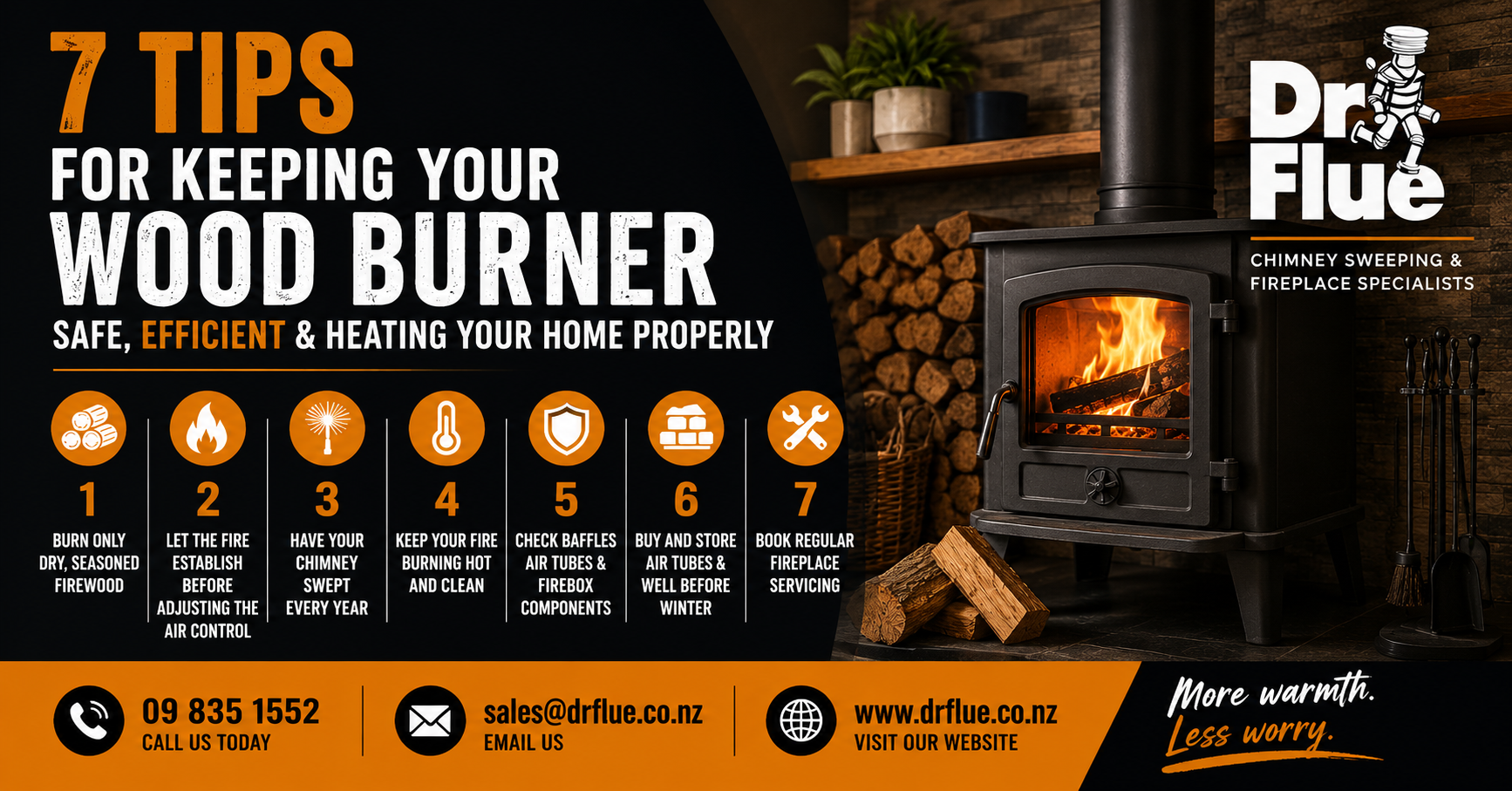
7 Tips for Keeping Your Wood Burner Safe, Efficient and Heating Your Home Properly
A modern wood burner is one of the most effective ways to heat an Auckland home.
When operated correctly, it can provide:
Excellent heat output
Reduced humidity
Lower condensation
Whole-home comfort
Reliable winter heating
However, even the best wood burner will struggle to perform if it is poorly maintained, operated incorrectly or burning poor-quality fuel.
Here are seven practical tips to help you get the best performance from your fireplace.
1. Burn Only Dry, Seasoned Firewood
The quality of your firewood has a greater impact on performance than almost anything else.
Wet or poorly seasoned firewood produces:
Less heat
More smoke
More creosote
Increased firewood consumption
Poor combustion
One of the biggest concerns with wet firewood is how quickly it can contaminate a flue system.
Excess moisture creates large amounts of smoke and creosote, which can accumulate surprisingly quickly. In some cases, we've seen heavily contaminated flues develop within just a few weeks of regularly burning wet wood.
Dry firewood burns hotter, cleaner and delivers significantly more usable heat while helping keep your chimney cleaner.
If your firewood hisses, bubbles or produces excessive steam, moisture may be affecting performance.
2. Let the Fire Establish Before Adjusting the Air Control
Many homeowners reduce the air control too soon after lighting a fire.
A wood burner needs time to:
Establish a strong draft
Heat the flue system
Create a good bed of embers
Reach efficient operating temperatures
Closing the air control too early can result in:
Excessive smoke
Reduced heat output
Blackened glass
Increased creosote formation
A hot, well-established fire will generally burn cleaner and produce more heat from every load of firewood.
3. Have Your Chimney Swept Every Year
A clean chimney is essential for both efficiency and safety.
Over time, soot and creosote build up inside the flue system.
This can result in:
Reduced draft
Poor combustion
Increased smoke production
Lower heat output
Increased chimney fire risk
Regular chimney sweeping helps maintain proper airflow and allows your wood burner to perform as intended.
For most Auckland homes, annual chimney sweeping should be considered essential maintenance.
4. Keep Your Fire Burning Hot and Clean
Modern wood burners are designed to operate within a specific temperature range.
One of the most common mistakes homeowners make is trying to regulate heat by turning the air control down too early.
Restricting airflow too soon can cause:
Excess smoke
Blackened fireplace glass
Creosote buildup
Reduced efficiency
Poor heat output
Instead of slowing the fire down prematurely, regulate the amount of heat produced by adjusting the amount of firewood you load into the firebox.
A smaller load of wood burning cleanly and at the correct temperature is far more efficient than a larger load that is starved of air.
Many homeowners mistakenly believe a slow, smouldering fire is more economical.
In reality, a hot, clean-burning fire often produces more usable heat, burns fuel more efficiently and helps reduce contamination within the flue system.
5. Check Baffles, Air Tubes and Other Firebox Components
Your wood burner relies on several consumable components to operate safely and efficiently.
The baffle plate is one of the most important components inside the firebox.
It helps retain heat within the appliance, allowing the secondary combustion process to occur. This improves efficiency, increases heat output and helps reduce smoke emissions.
The baffle also protects the flue system by preventing flames and excessive heat from travelling directly into the flue.
Without a correctly functioning baffle, temperatures inside the appliance can exceed what the wood burner was designed to handle, increasing wear and creating potential safety concerns.
Air tubes are equally important.
They introduce oxygen into the upper section of the firebox, allowing unburnt gases and smoke particles to ignite. This secondary combustion process produces additional heat while reducing smoke and emissions.
During the heating season, it's worth regularly checking:
Fire bricks
Baffles
Air tubes
Door seals
Glass retainers
Door rope
Internal components
Replacing worn components helps maintain safety, efficiency and overall fireplace performance.
6. Buy and Store Your Firewood Well Before Winter
One of the biggest mistakes homeowners make is waiting until winter to purchase their firewood.
Not only can demand make it harder to find quality firewood, but prices are often higher during the heating season.
Fortunately, there are many reputable suppliers who provide properly seasoned and kiln-dried firewood throughout the year.
Our best advice is to purchase next winter's firewood during spring or summer whenever possible.
This provides several advantages:
Lower off-season pricing
Additional drying time
Better firewood selection
Greater confidence in moisture content
Less risk of buying unseasoned wood during winter shortages
It's also important to remember that not all timber seasons at the same rate. Some hardwoods can take several years to season properly before they are ready to burn efficiently.
Once purchased, firewood should be:
Stored under cover
Kept off the ground
Protected from rain
Allowed good airflow around the stack
Properly seasoned and correctly stored firewood will burn hotter, cleaner and produce significantly more usable heat throughout winter.
7. Book Regular Fireplace Servicing
Many homeowners only think about their fireplace when something stops working.
Regular servicing allows potential issues to be identified before they become expensive repairs.
During servicing, issues such as:
Worn consumable parts
Water damage
Draft problems
Firebox deterioration
Flue system defects
can often be detected early.
At Dr Flue, we regularly help homeowners extend the life of their wood burners through routine servicing, maintenance and timely repairs.
In many cases, a small repair today can prevent a much larger problem tomorrow.
The Bottom Line
A safe and efficient wood burner doesn't happen by accident.
By following these seven simple tips, you can:
✅ Improve heat output
✅ Reduce firewood consumption
✅ Lower smoke production
✅ Reduce creosote buildup
✅ Extend the life of your wood burner
✅ Improve fireplace safety
✅ Keep your home warmer and more comfortable throughout winter
A little maintenance and good burning practice can make a significant difference to both performance and safety.
Talk To Dr Flue
Dr Flue provides professional:
Chimney Sweeping
Fireplace Servicing
Wood Burner Repairs
Replacement Wood Burners
Flue System Inspections
📞 09 835 1552
Need help getting the best performance from your fireplace? Contact Dr Flue today.